

By: Kaushiki Ishwar
There is something remarkable about the markets: without intervention, they strive to fulfil unmet needs. So, here’s the curious puzzle; prevention is better than cure; then why do we still have only a fraction of investments going into prevention and venture capitalists and investors making considerable investments in hospitals, clinics, and labs? Why do markets underinvest in something that most people would need instead of funding solutions that could enable prevention? To understand the answer, let’s first understand why capital chases cure.
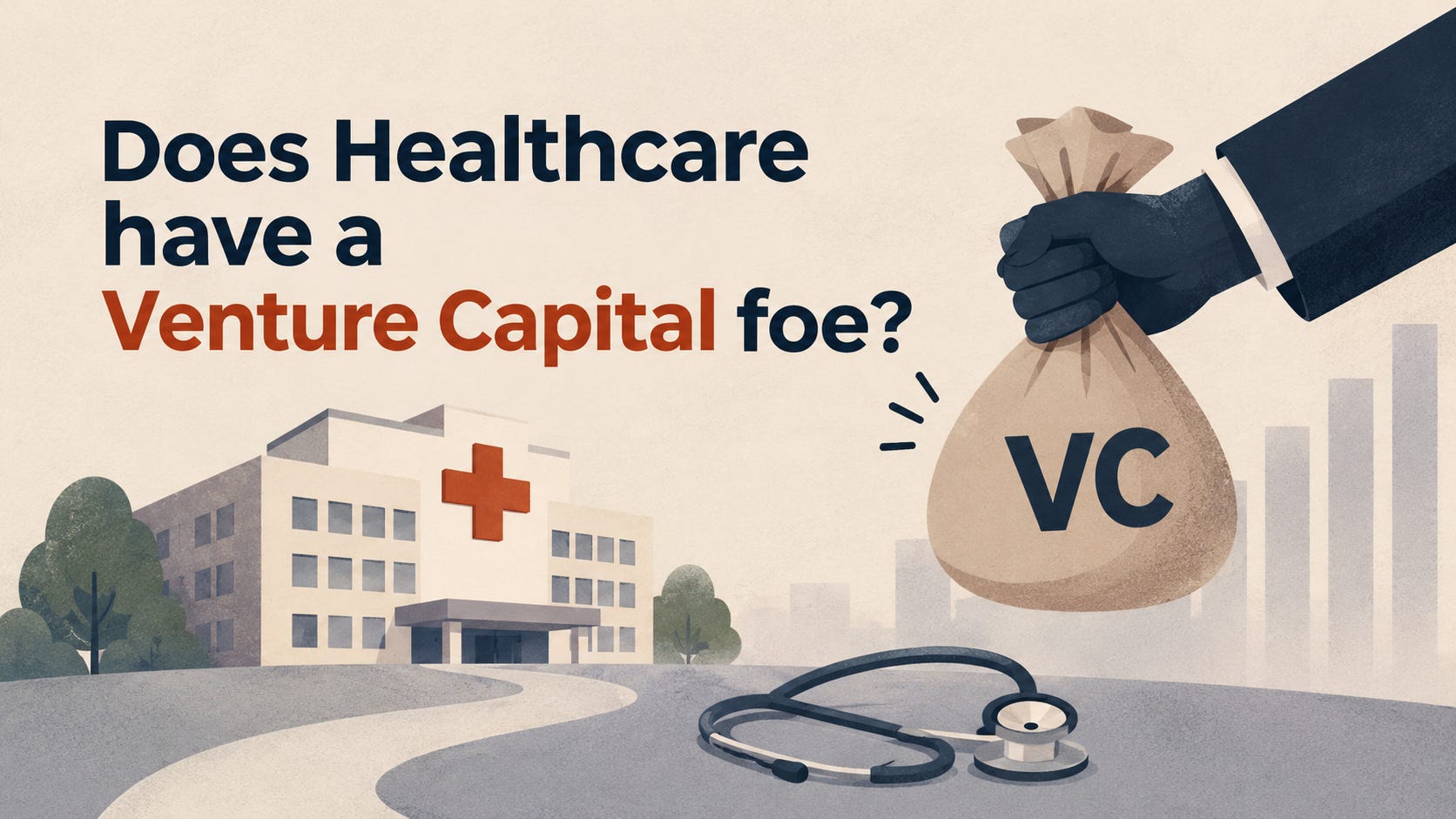
Risk assessment and predictability is what pulls investors towards treatment. It is hard for venture capitalists, private equity firms, or retail investors, to see results from preventive research compared to a cure for Ebola or COVID-19. A high-risk disease with an observable pattern, visible market and measurable targets. Prevention may take decades to show results and may not deliver in some cases.
Why don’t markets price in prevention? The answer lies partly in Bastiat’s distinction between the seen and the unseen. A cure is seen—a patient recovers, a product sells, a number goes up on a dashboard—a prevented disease is not seen. It is difficult to know who was spared and illnesses that haven’t arrived. Kenneth Arrow noted in 1963 that healthcare is unlike other markets because of uncertainty and information gaps. Venture capital needs to undertake this risk over a long-time horizon. This is not the whole story, regulators have made the unseen much harder to see.
Regulatory approval comes only when proved effective in curing an illness in a double-blind, peer-reviewed, and usually long-term trial costing millions of dollars. A product that lowers the odds of getting sick in the first place in 20 or so years in pre-defined conditions is not something the Central Drugs Standards Control Organisation would approve of. Payments work similarly, insurance companies and people pay against services provided based on written diagnosis by specialized professionals. Prevention can’t come with an invoice.
Israel Kirzner argued that entrepreneurs make their money by noticing what others have missed. If prevention really is undervalued, it should be exactly the sort of opportunity an alert investor would like to grab. Rock Health, which tracks US digital health venture funding, reported $3.7 billion across 114 deals in Q3 2026, a slight rise on Q3 2025, when it recorded $3.5 billion across 107 deals. The visible pattern is fewer, bigger bets placed in the market for known ills.
When funding concentrates after a few profitable cures, it distorts price signals in the market. Hayek’s knowledge problem is a starting point—no planner, and no single investor, knows where the next breakthrough lies. A functional market discovers best outcomes by trying many of them at once through a price discovery system. Regulators have removed this price discovery for entrepreneurs by limiting only pre-approved, established procedures to go to the market. Approval timelines, predictability of returns if a new treatment works or whether it will be approved shape risk in healthcare, far more than patients.
Some of the tried and tested solutions already exist. Under an advance market commitment, buyers could promise to purchase a vaccine if someone develops it; the pneumococcal vaccine commitment is the best-known case of this. Priority review vouchers reward firms that develop drugs for neglected diseases with a faster, tradable route to approval. Pay-for-success contracts and social impact bonds pay investors only when a health outcome is actually achieved, which, at least in principle, turns prevention into a return someone can measure.
These are market tools aimed at the problems markets are accused of ignoring. None of these are allowed in India. Markets can discover, assess risk, and allocate capital to preventive healthcare; they don’t because the price discovery mechanism is illegal. An insurer or employer that pays for prevention today may not hold on to that patient when the savings finally arrive, years later. What we need to do is switch the signals back on. Let outcomes of clinical trials be bought and sold like we do for crops and commodities, a futures market provides the information needed for venture funds to assess the risk and invest in preventive measures. We must let people be free to make a choice when they have an unknown, unproved treatment available and they are willing to bear the risk, like we do for cigarettes and alcohol, may be injurious to health, but it’s your choice as an adult.
Lastly, we need to stop the mechanism where drug companies and innovators must prove innocence otherwise they are deemed guilty; approval should be in the hands of the patients who know their rights and are willing to bear the risk. A cancer patient who has minimum chances of survival may agree to try a new treatment. If it works, humanity would benefit and others could try it and see for themselves. As of now, there is no choice. Unless you have followed the bureaucratic maze of drug controls and spent years proving a treatment works, you can not sell a treatment.
Venture capital and health can go hand in hand. For that to happen, the market needs ways to see prevention, to price it and to reward it. Markets do not lack the will to meet this unmet need. What they lack are the signals. Regulators have switched the signals off, for the fear of the unknown, preventing entrepreneurs from discovering better treatments. Venture funds do not seek guaranteed returns, they seek to explore solutions freely (of course with consenting, capable adults involved).
About the Author:
Kaushiki Ishwar is an emerging continental and experimental philosopher with a background in History, Philosophy, and Sociology and a Young India Fellowship (2026) from Ashoka University. She was nominated by the Legislative Assembly to represent India in the New Zealand Parliament and has worked with the Commonwealth Parliamentary Association in the UK and New Zealand.