

By: Shubhangi Yadav
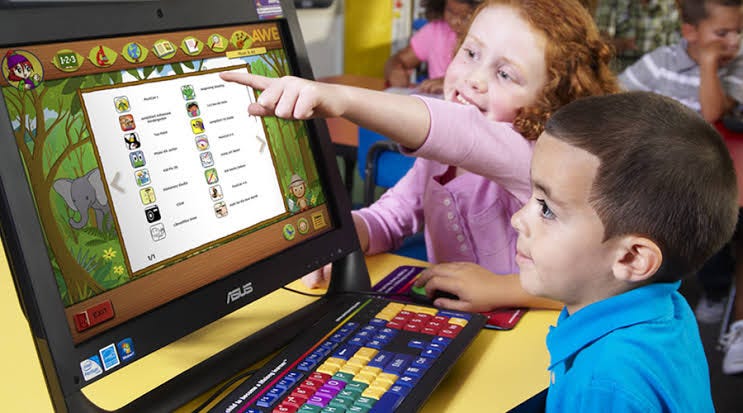
Walk into most Indian classrooms, and you’ll find the same scene that has played out for decades: a teacher at the front, notes on the board, and children copying them down. This has long been the dominant way of teaching, leaving little room for more interactive learning approaches. Ask a child what they did in class, and you rarely hear, “We played a game to learn fractions.” Game-based learning uses physical or digital games to teach concepts, develop problem-solving skills, and hold student attention. It covers online and video-game-style formats as much as board games, and all of them rest on one idea: that children learn by doing rather than by listening. Teachers who use it are not adding an activity to a lesson. They are changing how the lesson works.
The importance of play is gaining global recognition. In 2024, the United Nations (UN) marked the first International Day of Play on 11 June, recognising play as a child’s right and highlighting its role in supporting cognitive, physical, social, emotional, and creative development. The UN also notes that learning via games makes learning more engaging for children.
Far less attention has gone to a prior question: what determines whether a school can adopt such a method at all? Effectiveness alone does not make an innovation spread. Schools must be willing to adopt it, and they must be able to. A principal may see the value in a new teaching method and still fail to introduce it. For low-cost private schools, the constraint is rarely the willingness. It is the capacity.
The Incentive Is There
Private schools rely largely on fees paid by families, which makes attracting and retaining students a matter of survival. Low-cost private schools feel this most sharply, because enrolment determines whether they stay open. Parents choose these schools for English-medium instruction, exam results, and discipline, so no school can count on game-based learning to fill its classrooms by itself. But a school that improves the learning experience becomes easier to choose and harder to leave. Owners of low-cost private schools therefore have good reason to experiment.
Incentive alone, though, predicts very little. A school with both the desire and the means will experiment readily. A school with the desire but no means will delay, not because it undervalues the method, but because it cannot pay for it. Incentive and capacity together mark out four conditions under which schools decide whether to adopt game-based learning, and the matrix below sets them out.
Low Capacity
High Capacity
Low Incentive
Status quo
Able but unwilling
High Incentive
Willing but unable
Most likely to innovate
Low-cost private schools sit in the bottom-left cell. They want to innovate but cannot afford to.
The Case for Capacity
Wanting to act does not create the ability to act. Introducing game-based learning takes more than buying a classroom activity or subscribing to a digital platform. Teachers need training before they can build games into a lesson. Schools need materials, devices, and internet access, depending on the method, and teachers need time to plan activities and align them with the curriculum and its assessments. All of it demands money before it returns anything. In budget private schools, staff salaries already absorb nearly 60% of expenditure (Central Square Foundation, 2021). A new investment competes directly with the payroll. Cost, not conviction, is what keeps game-based learning out of these classrooms.
But where one school might not find it affordable, a cluster of schools can together share these costs. This can reduce the burden on each school. James Tooley argues that low-cost private schools can improve quality by coming together through school chains or associations. Through this, they can jointly invest in management, teacher training and curriculum development. The same logic applies to procuring game-based learning tools. An association of multiple schools can procure a learning tool once, making the investment more affordable per school. For example, if purchasing a digital learning platform costs ₹1 lakh, ten schools in a network could share the cost, reducing the expense to ₹10,000 per school instead of each school paying the full amount.
Schools can also draw on capacity built elsewhere. Public institutions and non-profits lower the cost of adoption by developing resources and training teachers directly. CIET-NCERT, in collaboration with NITI Aayog, has run free online training on game-based learning for teachers. The Opentree Foundation’s Play2Learn set up play-based learning centres at no cost in low-income schools in Maharashtra and trains teachers to use play-based methods in the classroom. Each of these initiatives removes an expense a school would otherwise meet on its own, and each sends teachers back to the classroom more confident about using the method.
Way Forward
Individual schools cannot expand game-based learning on their own. They depend on an ecosystem that makes good learning resources cheaper to develop and easier to reach. Affordable credit, shared teaching resources, and teacher training all build capacity directly. The Government of India’s push to strengthen the Animation, Visual Effects, Gaming and Comics (AVGC) sector may also support education indirectly. By expanding India’s pool of game developers, such initiatives could increase the availability of educational games and create more opportunities for collaboration between schools and developers over time.
Educational games will keep getting made. The harder question is which schools can put them to use. Low-cost private schools already understand what game-based learning offers them. What they lack is the money to buy it, the training to teach with it, and the organisation to keep it running. Affordable finance, teacher training, and school networks that spread costs would help address the problems schools face.
About the author:
Shubhangi Yadav is a third-year Economics student at Hindu College, University of Delhi, with interests in public policy and development studies. She was a Research Scholar under the Centre for Civil Society's Researching Reality 2025 Residency Program, where she worked on governance and decriminalization reforms, and led an Invest India-endorsed research project on India's trade partnerships.
An insightful perspective on how game-based learning can make education more engaging and accessible in low-cost private schools. Moving beyond traditional incentives toward meaningful, interactive learning could help build creativity, problem-solving skills, and a stronger culture of innovation.